
How Do You Choose Wire Loom Connectors for Industrial Harness Reliability?
Incorrectly selected wire loom connectors can allow moisture ingress, insulation abrasion, and mechanical strain that eventually cause electrical faults or costly equipment downtime. The most effective solution is to select the correct connector type based on conduit dimensions, mounting requirements, environmental exposure, sealing performance, and strain relief.
For automotive and industrial applications, wire loom connectors and wiring loom connectors may refer to corrugated conduit fittings, cable glands, protective entry fittings, or electrical connectors. These components perform different functions and should not be treated as interchangeable.
Whether you are assembling an LS1 4L60E wiring harness or developing an industrial control system, understanding these differences helps protect cables, improve assembly reliability, and avoid unnecessary installation failures.
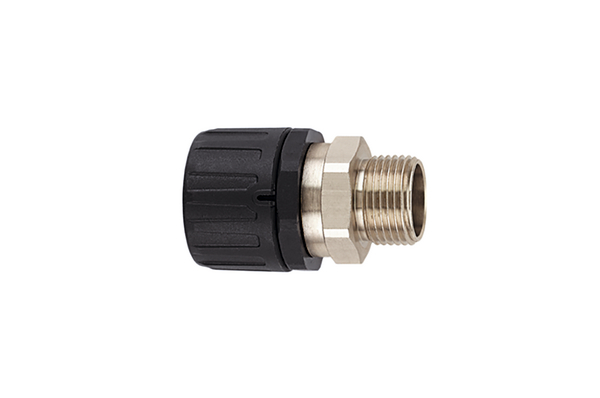
HellermannTyton — HG16-SM-M16 Corrugated Conduit Fitting, Product 166-21301
.
Manufacturer product photograph.
1. Select the Correct Type of Wire Loom Connector
Using the wrong connector type can leave a harness without proper protection, retention, or electrical continuity. The solution is to identify the required connection function before choosing a component.
A corrugated conduit fitting is not the same as an electrical connector. Conduit fittings secure protective tubing, while electrical connectors establish an electrical connection between compatible terminals. Cable glands and grommets serve different mechanical or sealing functions.
| Connector Type | Main Function | Selection Priority |
|---|---|---|
| Split Loom Connector | Secures corrugated protective tubing to a fitting or mounting interface. | Conduit diameter, rib profile, and retention. |
| Cable Gland | Secures cables entering an enclosure and may provide sealing and strain relief. | Cable diameter, seal design, and mounting thread. |
| Protective Grommet | Protects cables passing through panel openings. | Panel thickness, hole size, and abrasion protection. |
| Electrical Connector | Connects electrical circuits through terminals and contacts. | Electrical ratings, terminal compatibility, locking, and sealing. |
For example, an LS1 4L60E wiring harness may require corrugated loom fittings along the routing path, a protective firewall grommet, and dedicated electrical connectors for the engine and transmission.
Correct practice: Check the harness drawing, mating components, and installation location before selecting a wire loom connector.
2. Match Connector Materials and IP Ratings to the Environment
Unsuitable materials or sealing designs can allow connectors to crack, corrode, loosen, or admit moisture during service. The solution is to verify the connector's material specifications and environmental protection under actual operating conditions.
Polyamide 6.6 (PA66) is widely used in industrial conduit fittings because of its mechanical properties and manufacturing versatility. However, temperature resistance and chemical compatibility depend on the specific material grade.
Nickel-plated brass and stainless steel may be appropriate for certain mounting or environmental requirements, but neither material guarantees universal corrosion resistance or mechanical suitability.
For example, HellermannTyton's HG16-SM-M16 fitting combines a PA66 housing with a nickel-plated brass threaded interface. Its manufacturer specifications identify an IP66 rating and explicitly state that the fitting does not provide a strain-relief function.[1]
This distinction matters because an IP-rated fitting does not automatically provide cable strain relief.
Under IEC 60529, IP classifications describe protection against access, solid foreign objects, and water under defined test conditions.[2]
Do not assume every wire loom connector is IP67 or IP68. Verify the product's actual rating, compatible conduit or cable, installation requirements, and the protection of the completed assembly.
3. Size and Install Wiring Loom Connectors Correctly
An incorrectly sized fitting can damage the protective loom, reduce retention, compromise sealing, or transfer mechanical loads to the electrical terminals. The solution is to match the complete dimensional interface and follow the manufacturer's installation instructions.
For corrugated conduit fittings, confirm the nominal conduit size and compatible rib profile. For cable glands, check the specified cable diameter range. These measurements are not necessarily interchangeable.
Before approving a connector, verify:
- Conduit compatibility: Nominal size, tubing profile, and approved mating products.
- Mounting thread: Metric, NPT, or another specified thread system.
- Panel dimensions: Mounting-hole diameter, panel thickness, and thread engagement.
- Sealing interface: Required gasket, sealing washer, or compatible cable seal.
- Mechanical protection: Bend radius, connector clearance, retention, and strain relief.
Never apply a universal tightening torque based only on conduit diameter. The correct torque depends on the fitting design, thread specification, housing material, and sealing arrangement.
Overtightening can damage plastic threads or sealing components. Undertightening can reduce retention or compromise the intended enclosure protection.
Correct practice: Use the installation torque and assembly method specified by the manufacturer. If the technical data is unavailable, request confirmation before releasing the connector for production.
4. Prevent Common Wire Loom Connector Failures
Poorly installed wiring loom connectors can allow repeated vibration, water exposure, and cable movement to damage the harness over time. The solution is to validate the connector and its mounting arrangement as part of the complete wiring assembly.
Four failure modes deserve particular attention:
- Insulation abrasion: An unsecured harness moves against a sharp panel edge. Use an appropriate entry fitting or grommet and secure the routing.
- Moisture ingress: An unsuitable seal or incorrectly assembled fitting allows water into an enclosure. Verify the sealing interface and test the completed assembly.
- Terminal strain: Harness movement transfers mechanical load to crimped terminals. Provide suitable retention and strain relief where required.
- Connector loosening: Vibration or incorrect installation reduces mechanical security. Validate the locking and mounting arrangement under the expected operating conditions.
For automotive and industrial harness manufacturing, IPC/WHMA-A-620E provides requirements and acceptance criteria for cable and wire harness assemblies.[3]
However, IPC/WHMA-A-620 is not a universal certification for every wire loom connector. Connector sealing, environmental durability, and mechanical performance must still be evaluated against the relevant product and project requirements.
Before mass production: Request a connector data sheet, dimensional drawing, installation instructions, and available test reports. For custom harness projects, review a physical sample with the intended conduit, mounting panel, and cable assembly.
Conclusion: Protect Every Harness Connection Point
Reliable wire loom connectors help maintain harness protection, mechanical retention, and environmental integrity. The right selection starts with identifying the connector's function, verifying material and dimensional compatibility, and confirming that the completed installation meets the application's requirements.
Do not choose a fitting solely because it is advertised as industrial grade, waterproof, or high-temperature resistant. Evaluate the actual product specifications and test evidence.
If you are developing a custom automotive or industrial wiring harness, you can request a connector selection consultation, drawing review, or sample evaluation. Share your conduit dimensions, mounting details, operating conditions, and required protection level to identify a suitable solution before production.
FAQ
What are wire loom connectors used for?
Wire loom connectors are used to secure protective tubing, manage cable entries, protect panel openings, or connect electrical circuits, depending on the component type.
Are wire loom connectors waterproof?
Not all of them. Waterproofing depends on the product design, compatible components, installation, and tested IP rating. Always verify the completed assembly.
Can I use electrical tape instead of a wire loom connector?
Electrical tape can provide certain insulation or bundling functions, but it does not automatically replace a mechanical fitting, cable gland, or required strain-relief component.
Are there connectors for split wire loom?
Yes. Some fittings are designed for compatible corrugated or split protective tubing. Confirm the nominal diameter, rib profile, and retention method before ordering.
How do I choose the correct wiring loom connector size?
Match the fitting to the specified conduit or cable diameter and verify the mounting thread, panel dimensions, and manufacturer-approved compatibility range.
Do wiring loom connectors require special installation tools?
Some snap-fit designs require no special tools, while threaded fittings may require suitable wrenches or controlled tightening. Follow the manufacturer's instructions.
Does IP68 mean a connector is completely waterproof?
No. IP68 protection applies under specified test conditions. It does not guarantee suitability for every water exposure, chemical environment, or installation configuration.
What is the difference between a cable gland and a conduit fitting?
A cable gland typically secures a cable at an enclosure entry and may provide sealing and strain relief. A conduit fitting connects protective tubing to another fitting or mounting interface. Their functions can overlap, but they are not automatically interchangeable.
References
-
HellermannTyton — HG16-SM-M16 Corrugated Conduit Fitting, Product Specifications.
-
International Electrotechnical Commission — IEC 60529: Degrees of Protection Provided by Enclosures (IP Code).
-
IPC — IPC/WHMA-A-620E: Requirements and Acceptance for Cable and Wire Harness Assemblies.
About the Author — 15 Years of Automotive Wire Harness Industry Experience
Drawing on 15 years of experience in the automotive wire harness industry, my focus is on practical harness design, connector selection, cable protection, assembly quality, and engineering validation. In real automotive projects, long-term reliability depends on more than selecting a high-quality cable. Every fitting, connector, and protective interface must work together under the actual operating conditions. My approach is to verify technical specifications, identify potential failure points early, and help customers develop reliable, manufacturable wiring harness solutions.


