
How Do You Select Reliable Wire Loom Clamps for Automotive and Industrial Harnesses?
Poorly selected wire loom clamps can allow cables to vibrate, rub against sharp edges, and eventually suffer insulation damage or electrical failure. The most effective solution is to choose wire loom holders based on the finished harness diameter, operating temperature, vibration exposure, mounting method, and material compatibility.
For automotive and industrial applications, a reliable clamp must hold the wiring securely without crushing the protective loom. Cushioned P-clamps, heavy-duty cable holders, and engineered polymer clips each have advantages, but no single design is suitable for every installation. This guide explains how to select the correct clamp, avoid common installation mistakes, and validate harness support before production.
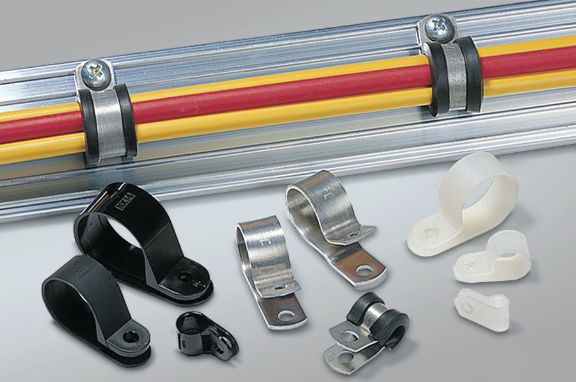
HellermannTyton — Industrial Cable Clamps and Wire Management Solutions
.
1. Select the Right Wire Loom Clamp Type for Your Application
Using an unsuitable clamp can leave the harness unsupported or create concentrated pressure that damages its protective covering. The solution is to match the clamp design to the routing geometry, bundle load, mounting surface, and maintenance requirements.
Cushioned P-clamps are commonly considered when a harness needs a fixed mounting point and a protective interface. Heavy-duty polymer clamps and adjustable cable holders can also be suitable when their mechanical performance and environmental ratings meet the application requirements.
| Clamp Type | Typical Application | Key Selection Factor |
|---|---|---|
| Cushioned P-Clamp | Automotive harnesses, machinery, and fixed cable routing | Cushion compatibility, clamp diameter, and mounting strength |
| Polymer Cable Holder | Lightweight harness routing and vehicle assembly | Material grade, retention force, and temperature rating |
| Heavy-Duty Clamp | Commercial vehicles and high-vibration equipment | Mechanical load, vibration performance, and fastener security |
| Adjustable Cable Clamp | Multiple bundle sizes and serviceable installations | Approved bundle range, locking mechanism, and service access |
Manufacturers such as HellermannTyton offer different clamp designs for industrial and automotive cable routing. Always verify the specific product data sheet rather than assuming that all clamps of the same type have identical performance.[1]
2. Match Clamp Materials to Heat, Chemicals, and Corrosion
Incorrect material selection can cause rubber cushions to deteriorate, metal bands to corrode, or polymer clips to lose mechanical strength. The solution is to evaluate both the clamp body and its cushion against the actual operating environment.
EPDM cushions generally offer good resistance to ozone and weathering, but they are not universally suitable for petroleum oils and fuels. Silicone and other elastomers may be appropriate for different temperature or chemical conditions, depending on their formulations.
For exposed installations, stainless steel can provide useful corrosion resistance. However, 316 stainless steel is not completely corrosion-proof, and it should not be selected without considering mechanical strength, cost, mounting requirements, and the surrounding environment.
Before approving a clamp, verify:
- Operating temperature: Continuous and peak temperature exposure.
- Chemical compatibility: Contact with oils, coolants, cleaning agents, and other fluids.
- Corrosion resistance: Moisture, salt exposure, and the compatibility of mounting hardware.
- Mechanical durability: Vibration, shock, retention, and long-term loading.
Common mistake: Assuming that a black plastic clamp is automatically heat-stabilized or that every EPDM cushion is suitable for engine-bay service.
Correct approach: Request the manufacturer's material specifications and validate the selected product under the expected environmental conditions.
3. Choose the Correct Clamp Size Without Damaging the Loom
An oversized clamp can allow the harness to move, while an undersized clamp can deform the loom and apply excessive pressure to the wiring. The solution is to measure the outside diameter of the completed protected bundle and select a clamp within its approved size range.
Do not use the nominal inside diameter of split loom tubing as the clamp size. Measure the actual outside diameter after the wires and protective covering have been assembled.
For corrugated or irregular tubing, consider the outer rib profile and any dimensional variation. Confirm that the selected clamp retains the assembly without excessive compression.
Also check the mounting-hole diameter, fastener size, panel thickness, available clearance, and routing direction. A correctly sized clamp can still fail if the mounting arrangement is unsuitable.
Engineering recommendation: If the harness diameter varies along its length, evaluate each mounting location separately instead of assuming one clamp size will fit the entire assembly.
4. Validate Support Spacing and Harness Retention
Excessive distance between wire loom clamps can allow unsupported cable sections to sag, vibrate, or contact surrounding components. The solution is to determine support locations from the actual harness design and verify them through appropriate mechanical and environmental testing.
There is no universal 12-inch support-spacing rule for every automotive or industrial harness. Required spacing depends on cable mass, stiffness, vibration, routing geometry, connector locations, and customer specifications.
Pay particular attention to bends, branch points, connector exits, and locations near sharp edges or hot surfaces. These areas can experience concentrated mechanical loading if the harness is poorly supported.
For relevant cushioned loop-clamp applications, engineers may consult SAE AS21919. The specification concerns cushioned support clamps; it should not be interpreted as a universal spacing standard for every automotive wiring harness.[2]
For cable and wire harness assembly workmanship, IPC/WHMA-A-620 provides relevant requirements and acceptance criteria. It does not automatically certify every clamp design or replace application-specific validation.[3]
Before mass production: Review the routing drawing, confirm the clamp positions, inspect the installed harness, and perform the vibration, retention, and environmental tests required by the project.
Conclusion: Reliable Harness Protection Starts With Correct Clamp Selection
Reliable wire loom clamps protect the entire wiring harness by controlling movement, reducing abrasion risks, and maintaining secure cable routing. Correct selection requires more than choosing a material or matching a nominal diameter. Engineers must consider clamp geometry, cushion compatibility, environmental exposure, mounting strength, and validated support locations.
If you are developing an automotive or industrial wiring harness, you can request a technical drawing review, clamp selection consultation, or sample evaluation before finalizing the design. Providing the finished bundle diameter, mounting details, operating conditions, and project requirements will help identify a suitable solution.
15 Years of Automotive Wire Harness Engineering Experience
Drawing on 15 years of experience in the automotive wire harness industry, my focus is on practical component selection, reliable harness routing, mechanical protection, and manufacturing validation. In real engineering projects, even a small mounting component deserves careful attention because long-term harness reliability depends on the performance of the complete assembly.
FAQ
What are wire loom clamps used for?
Wire loom clamps secure protected cable bundles to a mounting surface. They help control harness movement, maintain routing, and reduce the risk of abrasion or mechanical strain.
How do I choose the correct wire loom clamp size?
Measure the outside diameter of the completed protected bundle and choose a clamp within the manufacturer's specified size range. Avoid excessive looseness or compression.
Are EPDM cushioned P-clamps suitable for automotive applications?
Yes, when the specific EPDM compound and clamp design meet the application's temperature, chemical, vibration, and mounting requirements.
Are stainless steel wire loom clamps better than plastic clamps?
Not always. Stainless steel may be suitable for demanding mechanical or corrosive environments, while qualified polymer clamps can offer lower weight and efficient assembly. Selection depends on the application.
How far apart should wire loom clamps be installed?
Support spacing should follow the applicable engineering or OEM specification. It must account for harness weight, vibration, routing geometry, and connector strain rather than relying on one universal distance.
Can cable ties replace wire loom holders?
Cable ties may be suitable when the design permits them and the mounting, material, retention, and abrasion requirements are satisfied. They should not replace required structural support or strain relief without validation.
What information should I provide when requesting custom wire loom clamps?
Provide the harness outside diameter, mounting-hole dimensions, operating temperature, chemical exposure, vibration requirements, drawings, expected quantity, and any required test specifications.
References


