

Why Does a Heating Wire Harness Need PI Film?
Without reliable insulation, a heating wire harness can develop hot spots, short circuits, burned components, and serious customer complaints.
The most effective solution is to wrap or laminate the heating element with automotive-grade polyimide film. PI film provides thin electrical insulation, high-temperature stability, and mechanical support without making the harness excessively bulky.
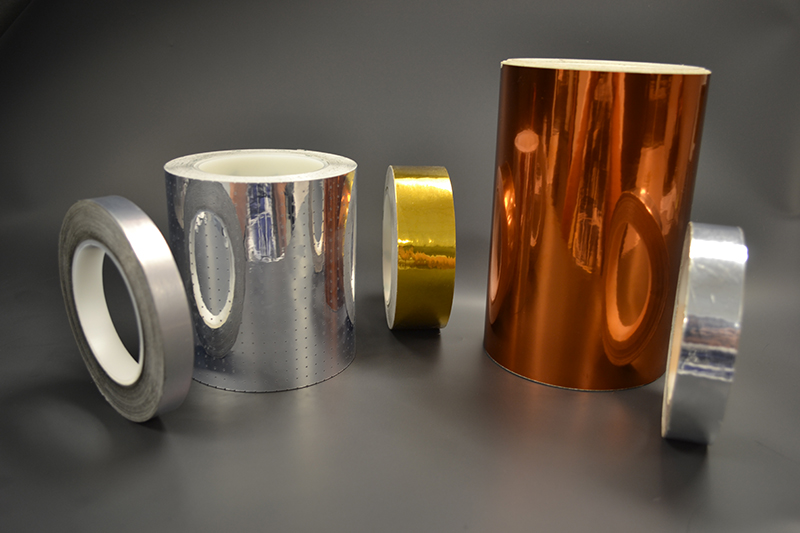
Why Does PI Film Matter in a Heating Wire Harness?
Heating conductors can create concentrated heat at crimps, bends, overlaps, and resistance-wire transitions, causing ordinary insulation to soften or expose live metal.
PI film creates a stable dielectric barrier between the heating conductor and nearby wires, metal frames, foam, textiles, or battery components. Its thin structure also helps maintain conductor spacing during vibration and repeated thermal expansion.
This makes PI film suitable for compact heating harnesses where conventional tape or thick tubing may reduce flexibility or consume too much installation space.
What Problems Can PI Film Prevent?
If heating conductors touch, shift, or become exposed, the harness may develop uncontrolled heating, insulation breakdown, or a serious thermal failure.
A continuous PI film layer helps reduce short-circuit, abrasion, and hot-spot risks. Kapton HN polyimide film has published electrical and thermal properties, but finished harness performance still depends on film thickness, overlap, adhesive quality, edge protection, and process control. [1]
PI film cannot replace a fuse or temperature sensor. A reliable heating harness may also require overcurrent protection, an NTC sensor, a thermal fuse, controller monitoring, and a software timeout.
How Should PI Film Be Specified?
Buying generic amber tape only by color and price can cause inconsistent dielectric strength, adhesive peeling, film shrinkage, and poor material traceability.
The correct solution is to specify the film, adhesive, thickness, overlap, operating temperature, and wrapping process as one complete insulation system. The film rating must not be treated as the rating of the adhesive, connector, terminal, sensor, or complete heating harness.
| Requirement | Recommended Solution | Main Risk |
|---|---|---|
| Electrical insulation | Traceable PI film with controlled overlap | Pinholes or exposed edges |
| High-temperature bonding | Qualified high-temperature adhesive | Peeling or adhesive flow |
| Crimp protection | Smooth crimp profile with secondary insulation | Film puncture from sharp edges |
| Moisture protection | Sealed laminate, tubing, or overmolding | Water entering through seams |
The finished harness should be evaluated for dielectric strength, insulation resistance, temperature uniformity, vibration, abrasion, humidity, fluid exposure, and adhesive aging. ASTM D149 covers dielectric breakdown testing for solid electrical insulating materials, while ISO 19642-2 defines test methods for automotive electrical cables. [2] [3]
Crimp areas require special attention because sharp conductor or terminal edges can puncture thin film. Rounded crimp geometry, controlled wrapping tension, sufficient overlap, and secondary insulation help reduce this risk.
Send your voltage, target resistance, maximum temperature, drawing, connector specification, installation space, and annual demand for a prototype evaluation.
FAQ
Incorrect assumptions about PI film can lead to underspecified insulation, missing circuit protection, and premature harness failure.
Use the following answers to confirm whether PI film matches your heating harness design and operating environment.
Does every heating wire harness require PI film?
No. PI film is mainly used when the harness requires thin, flexible, high-temperature electrical insulation.
Is Kapton the same as PI film?
Kapton is a commercial polyimide film brand, while PI film is the general material category.
Can PI film replace a fuse?
No. PI film provides insulation but cannot disconnect power during overcurrent, sensor failure, or controller failure.
Is PI film waterproof?
Not by itself. Waterproof performance depends on sealed edges, adhesive continuity, connector sealing, tubing, laminating, or overmolding.
Based on 15 years of automotive wire harness experience, I recommend reviewing the PI film, heating conductor, crimp, sensor, connector, controller, and fuse as one complete system. The safest heating harness is not the one using the thickest film, but the one that remains stable after thermal cycling, vibration, humidity, and real vehicle operation.
For a material review, prototype sample, or heating harness design assessment, provide your electrical parameters and installation requirements before finalizing the insulation structure.


