
Is 6 AWG Wire the Right Choice for Your Subpanel, EV Charger, or Automotive Power Circuit?
If 6 AWG wire is selected only by “gauge size” and not by ampacity, insulation temperature, conductor material, voltage drop, and termination quality, the result can be overheated cable, melted insulation, breaker nuisance trips, battery voltage sag, or a failed vehicle power circuit.
The most effective solution is to match 6 AWG wire to the real load environment: NEC-based sizing for buildings, SAE-rated cable for vehicles, tinned copper for marine corrosion zones, and properly crimped lugs for battery or inverter circuits.
6 AWG wire is a practical medium-power conductor. It is smaller and easier to route than 4 AWG, but still strong enough for many 50 amp to 60 amp circuits, automotive battery cables, RV inverters, car audio amplifiers, and EV charger branch circuits when installed correctly.

What Is 6 AWG Wire?
If 6 AWG is confused with 6 mm² cable or smaller automotive primary wire, the circuit may look correct on paper but overheat under real current load.
The correct answer is that 6 AWG is an American Wire Gauge conductor size with a bare solid conductor diameter of about 0.162 inch, or 4.11 mm, and a cross-sectional area of about 13.3 mm².[4]
In the AWG system, smaller numbers mean larger conductors. So 6 AWG is larger than 8 AWG, smaller than 4 AWG, and often used where the project needs both current capacity and reasonable flexibility.
| 6 AWG Specification | Typical Value | Why It Matters |
|---|---|---|
| Bare conductor diameter | About 0.162 inch / 4.11 mm | Affects lug size, bending space, and conduit fill |
| Cross-sectional area | About 13.3 mm² | Controls resistance, heating, and voltage drop |
| Common names | #6 wire, 6 gauge wire, 6 AWG cable | Used in electrical, automotive, RV, and marine projects |
| Typical conductor options | Copper, tinned copper, aluminum, CCA | Material changes ampacity, corrosion resistance, and voltage drop |
How Many Amps Can 6 AWG Wire Handle?
If one fixed amp rating is used for every 6 AWG wire, the installation can become unsafe because copper, aluminum, insulation temperature, ambient heat, and terminal rating all change the final current limit.
The correct solution is to start with NEC Table 310.16 for building wiring, then apply temperature-column limits, conductor-count adjustment, ambient correction, and equipment terminal ratings.[1]
For common NEC building-wire ampacity, 6 AWG copper is listed at 55 amps in the 60°C column, 65 amps in the 75°C column, and 75 amps in the 90°C column. Aluminum or copper-clad aluminum 6 AWG is lower, so it must not be treated as a direct copper replacement.
| Conductor Material | 60°C Column | 75°C Column | 90°C Column | Important Note |
|---|---|---|---|---|
| 6 AWG Copper | 55 A | 65 A | 75 A | Final breaker sizing depends on terminal rating and code rules |
| 6 AWG Aluminum / Copper-Clad Aluminum | 40 A | 50 A | 55 A | Requires compatible terminals and correct torque control |
Wrong: using the 90°C ampacity number as the final breaker rating without checking the terminals. Correct: using the correct temperature column and treating 90°C ampacity mainly as a correction or adjustment starting point when permitted.
Can 6 AWG Wire Be Used for a 60 Amp Circuit?
If 6 AWG is placed on a 60 amp breaker without checking insulation type, terminal temperature rating, cable assembly type, and local inspection rules, the circuit may fail inspection or run hotter than expected.
The safe solution is to confirm whether the installation allows the 60°C or 75°C ampacity column, and whether the equipment is marked for the conductor temperature being used.[2]
In many real installations, 6 AWG copper is commonly seen on 50 amp and some 60 amp circuits, but this is not automatic. NM-B cable, THHN in conduit, EV charger wiring, and equipment feeders may be treated differently by code and by the local authority having jurisdiction.
Is 6 AWG Wire Good for a Level 2 EV Charger?
If an EV charger is treated like a short-duration appliance, the wire may overheat during long overnight charging because EV charging is a continuous load.
The correct solution is to size the circuit for continuous charging load, charger output current, breaker size, conductor material, and the manufacturer’s installation manual.
For many 40 amp to 48 amp Level 2 EV charger installations, 6 AWG copper is a common practical choice when the wiring method and terminal ratings support it. For long runs, hot garages, or conduit with multiple current-carrying conductors, voltage drop and derating may push the design toward a larger conductor.
Is 6 AWG Wire Suitable for Automotive Battery Cable?
If building wire or low-grade CCA cable is used as automotive battery cable, vibration, heat, oil exposure, and poor flexibility can create loose terminals, voltage drop, and hard-start failures.
The better solution is to use SAE-rated automotive battery cable, especially for starter circuits, alternator charging cables, ground straps, auxiliary batteries, and inverter connections.
SAE J1127 covers low-voltage battery cable for surface vehicle electrical systems at 60 VDC or less.[5] For vehicles, cable strand structure, insulation toughness, fluid resistance, and crimp quality matter as much as the gauge number.
Should You Choose Copper, Aluminum, or CCA 6 AWG Wire?
If aluminum or CCA is used as a cheap substitute for copper without recalculating ampacity and voltage drop, the circuit can suffer heat buildup, unstable voltage, and premature connection failure.
The most reliable solution is copper for automotive, marine, RV, inverter, car audio, and compact high-current systems, while aluminum should be used only where the equipment and code clearly allow it.
Copper has better conductivity and stronger termination behavior in vibration-prone environments. Aluminum is lighter and cheaper, but it requires compatible terminals, proper oxidation control, and precise torque. CCA should be avoided in demanding vehicle power circuits.
| Material | Best Advantage | Main Risk | Recommended Use |
|---|---|---|---|
| OFC Copper | High conductivity and stable crimping | Higher cost | Automotive battery cable, car audio, inverter wiring |
| Tinned Copper | Better corrosion resistance | More expensive than bare copper | Marine, RV, off-road, wet battery compartments |
| Aluminum | Lower cost and lighter weight | Lower ampacity and stricter termination needs | Building feeders where listed and code-approved |
| CCA | Cheap and lightweight | Higher resistance than copper | Low-demand use only, not serious high-current vehicle circuits |
Where Is 6 AWG Wire Commonly Used?
If 6 AWG is used in the wrong environment, the wire may pass a short bench test but fail after vibration, charging heat, moisture, or long-distance voltage loss.
The correct solution is to match the cable type to the application, not just to the amp number.
In buildings, 6 AWG wire is often used for subpanels, EV chargers, HVAC equipment, welders, ranges, and workshop circuits. In vehicles and boats, it is used for battery leads, auxiliary power distribution, winches with moderate current demand, car audio amplifiers, RV inverters, and solar battery bank connections.
How Far Can You Run 6 AWG Wire?
If the run is too long, a 6 AWG conductor may be ampacity-safe but still deliver poor voltage, causing weak motor torque, slow charging, inverter alarms, or amplifier shutdown.
The right solution is to calculate voltage drop using current, one-way distance, voltage, conductor material, and allowable voltage-drop target before buying the wire.
Voltage drop is especially important in 12 V and 24 V automotive or marine systems. A cable that works well for 10 feet may be too small for 30 feet at the same current, even when the insulation does not overheat.
How Should 6 AWG Wire Be Terminated?
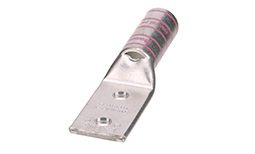
If a 6 AWG lug is loosely crimped, under-torqued, or mismatched to the conductor material, the connection can become a hidden heater and fail before the cable itself.
The best solution is to use correctly sized lugs, a proper crimping tool, adhesive-lined heat shrink, clean contact surfaces, and manufacturer-specified torque.
Large cable failures often start at the terminal, not in the middle of the wire. A good crimp creates strong metal-to-metal compression, while sealed heat shrink reduces moisture, strand movement, and corrosion creep.
What Are the Most Dangerous 6 AWG Wire Mistakes?
If the system fails, the real cause is often not “6 AWG is too small,” but that the wire, fuse, terminal, insulation, and route were not designed as one system.
The solution is to check the entire current path from power source to load before production or installation.
| Mistake | Failure Risk | Correct Action |
|---|---|---|
| Using CCA as copper | Voltage drop and heat under load | Use OFC copper or tinned copper for vehicle power circuits |
| No fuse near battery | Cable can burn during a short circuit | Install a correctly rated fuse close to the power source |
| Wrong terminal temperature assumption | Overheated breaker or equipment connection | Follow equipment markings and NEC terminal rules |
| Poor crimping | High-resistance hot spot | Use matched lugs and the correct crimp die |
| Ignoring voltage drop | Weak load performance | Calculate current and distance before final cable selection |
FAQ: 6 AWG Wire Questions
How many amps can 6 AWG copper wire carry?
For common NEC building-wire ampacity, 6 AWG copper is listed at 55 amps in the 60°C column, 65 amps in the 75°C column, and 75 amps in the 90°C column. The usable value depends on installation method, terminals, and derating.
Can 6 AWG wire handle 60 amps?
Sometimes, but not automatically. 6 AWG copper may be used for some 60 amp circuits when the wiring method, insulation rating, terminal rating, and local code rules allow it. Always verify with the equipment label and local electrical code.
Is 6 AWG wire good for a 50 amp breaker?
Yes, 6 AWG copper is commonly used for many 50 amp circuits, provided the cable type, insulation rating, and installation conditions are correct.
Is 6 AWG bigger than 8 AWG?
Yes. In the AWG system, smaller numbers mean larger conductors. 6 AWG is larger than 8 AWG and has lower resistance.
Can I use 6 AWG aluminum instead of 6 AWG copper?
Not as a direct replacement. 6 AWG aluminum has lower ampacity than 6 AWG copper and needs compatible terminals, proper torque, and approved installation conditions.
Is 6 AWG wire good for car audio?
Yes, true copper 6 AWG cable can work for many medium-power car audio amplifiers. For higher RMS power, long battery-to-amplifier runs, or multiple amplifiers, 4 AWG or larger may be better.
What is the difference between 6 AWG welding cable and 6 AWG battery cable?
Welding cable is usually very flexible because it uses fine strands. Battery cable is designed for vehicle battery and starter circuits. The best choice depends on flexibility, heat, oil exposure, abrasion, and certification needs.
Can 6 AWG wire be used for an EV charger?
Yes, 6 AWG copper is commonly used for many Level 2 EV charger circuits, especially in the 40 amp to 48 amp charging range. Final approval depends on charger instructions, breaker size, wiring method, and code requirements.
Final Expert Note
6 AWG wire is not just a size. It is a current path that must be protected by the right insulation, fuse, terminal, routing method, and installation standard.
After 15 years working with automotive wire harnesses, battery cables, inverter leads, and custom vehicle power assemblies, my field rule is simple: most cable failures do not begin in the copper; they begin at the wrong connection, wrong protection, or wrong assumption. If you are unsure whether 6 AWG wire fits your project, send the current, voltage, cable length, environment, and terminal type before production. A small sample or technical review can prevent a much larger failure later.
References
- NFPA, “NFPA 70, National Electrical Code.” NFPA 70 NEC
- UL Solutions, “Panelboard Application Guide.” UL Panelboard Application Guide
- UL Solutions, “Wire and Cable Application Guide.” UL Wire and Cable Application Guide
- ASTM International, “ASTM B258 Standard Specification for Standard Nominal Diameters and Cross-Sectional Areas of AWG Sizes.” ASTM B258 AWG Standard
- SAE International, “SAE J1127 Low Voltage Battery Cable.” SAE J1127
- UL Solutions, “Low Voltage Cable Testing.” UL Solutions Low Voltage Cable Testing
- TE Connectivity, “Automotive Cable Assemblies.” TE Connectivity Automotive Cable Assemblies
- TE Connectivity, “Electric vehicle cable assemblies.” TE Connectivity EV Cable Assemblies
- Panduit, “Wire Termination.” Panduit Wire Termination


